
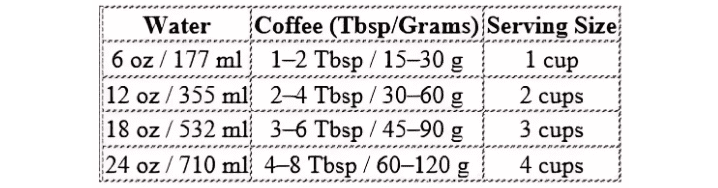
☕ Quick answer: use 1 scoop (2 tablespoons, about 10 grams) of ground coffee per 6 oz of water. For a full 12-cup pot, that’s roughly 12 scoops. Below you’ll find the complete chart, gram conversions, and the right ratio for every brew method.
Ever wonder why your coffee tastes different every morning? The secret often lies in one simple detail: how many scoops of coffee you’re using per cup. At Berk’s Beans Coffee, we believe the perfect brew starts with balance—getting your coffee-to-water ratio just right. This guide walks you through the science (and art) of measuring coffee, so every cup you brew at home tastes café-quality.
The Golden Ratio of Coffee Brewing
The Golden Ratio is the foundation of brewing excellence. Coffee experts recommend using 1 to 2 tablespoons of coffee grounds for every six ounces of water. This simple guideline can be adjusted depending on how strong you prefer your morning brew.
How Many Scoops of Coffee Per Cup?
- 1 scoop = 2 tablespoons of coffee grounds
- For a 6 oz cup: 1 scoop (strong and bold)
- For a 12 oz cup: 2 scoops (balanced and rich)
Prefer something milder? Cut back slightly until you find your sweet spot.
Tablespoons, Grams, and Beans—Your Coffee Conversion Guide
- 1 scoop = 2 tablespoons ≈ 10 grams
- 1 tablespoon ≈ 5 grams
- 1 coffee bean ≈ 0.1 to 0.2 grams
➡️ For a 12 oz cup, you’ll need 2–4 tablespoons (about 10–20 grams), or roughly 70–130 beans, depending on your taste.
Coffee-to-Water Ratio Table
| Cups (6 oz each) | Water | Scoops (2 tbsp) | Tablespoons | Ground coffee |
|---|---|---|---|---|
| 1 cup | 6 oz | 1 | 2 | ~10 g |
| 4 cups | 24 oz | 4 | 8 | ~40 g |
| 8 cups | 48 oz | 7–8 | 14–16 | ~80 g |
| 10 cups | 60 oz | 10 | 20 | ~100 g |
| 12 cups | 72 oz | 12 | 24 | ~120 g |
Scoops vs. Grams: Why Measuring by Weight Is Better
The biggest limitation of scoops is inconsistency. Coffee grounds can vary in density depending on grind size — a scoop of finely ground espresso contains significantly more coffee by weight than the same scoop of coarse French press grind. Even with a standardized tablespoon, compaction varies based on grind and technique.
A kitchen scale eliminates this variability entirely. Measuring by grams gives you a consistent, repeatable dose every time — which means you can actually diagnose problems and improve your brew systematically. If you taste a difference between batches, you know it’s not the dose — it’s something else.
Investing $10–15 in a basic kitchen scale is one of the simplest upgrades you can make for your home coffee setup. Many coffee enthusiasts consider it more impactful than upgrading your brewer.
Coffee Ratios for Every Brewing Method
Different brewing methods call for different ratios because of how they extract coffee. Here are recommended starting ratios for the most common brewing methods:
- Drip coffee maker: 1:15–1:17 (e.g., 60g coffee per 1 liter/1000g water)
- Pour over (V60, Chemex): 1:15–1:17 (18g coffee per 300g water for a standard cup)
- French press: 1:12–1:15 (25g coffee per 300–375g water for a fuller body)
- AeroPress: 1:6–1:12 for concentrate (12–20g coffee per 70–120g water)
- Espresso: 1:2 (18g coffee → 36g espresso output in 25–30 seconds)
- Cold brew: 1:4–1:8 for concentrate (100g coffee per 400–800g water, 12–24 hour steep)
- Moka pot: Fill the basket without compressing; this is essentially a fixed ratio based on your pot’s size
How to Adjust Coffee Strength
The simplest way to make stronger or weaker coffee isn’t to change your brewing method — it’s to adjust your dose:
- Too weak or watery? Increase coffee by 1–2 grams (or reduce water by 10–15ml). Repeat until you hit your ideal strength.
- Too strong or bitter? Decrease coffee by 1–2 grams (or increase water). Bitterness specifically may also indicate over-extraction — try a slightly coarser grind.
- Sour or underdeveloped? This is more likely an extraction issue (too coarse, too cool, too fast) than a dose issue. Try a finer grind or higher water temperature first.
The Impact of Bean Freshness on Perceived Strength
Here’s something that surprises most home brewers: stale coffee often tastes simultaneously stronger (more bitter, flat) AND weaker (less complex, less flavorful) than fresh coffee. This seeming contradiction is because stale coffee has lost the volatile aromatic compounds that create the impression of richness and complexity, while the bitter, earthy base notes that are more chemically stable become relatively more prominent.
Switching to freshly roasted coffee often means you can actually use slightly less coffee (reducing your dose) while getting a more satisfying cup — because the full flavor spectrum is present. If your coffee has been feeling thin despite using a strong ratio, freshness may be the missing ingredient.
Start Brewing Better Today
Getting your coffee-to-water ratio right is one of the easiest, most impactful changes you can make for your home brewing. Pair a properly measured dose with freshly roasted beans from Berk’s Beans Coffee, and you’ll experience a dramatic improvement in your daily cup. Order your next bag — roasted to order in Concord, CA, and shipped within 72 hours.
Frequently Asked Questions: How Many Scoops of Coffee Per Cup
How much coffee do I use for 4 cups?
For 4 standard 6-ounce cups (24 oz total), use about 4 scoops (8 tablespoons, roughly 40 grams) of coffee grounds, adjusting to taste.
How much coffee do I put in a 12-cup coffee maker?
A standard 12-cup pot (about 60–72 oz) typically needs 10 to 12 scoops (20 to 24 tablespoons) of ground coffee, depending on how strong you like it.
How much coffee do I use for 8 cups of water?
For 8 cups of water (about 48 oz), use roughly 7 to 8 scoops (14 to 16 tablespoons) of coffee grounds, following the same 1-to-2-tablespoon-per-6-ounce ratio.
Is a coffee scoop the same as a tablespoon?
No. A standard coffee scoop holds about 2 tablespoons of ground coffee (roughly 10 grams).
Do I need a scale to brew good coffee?
No—scoops work fine for everyday brewing. A scale simply adds consistency, since a scoop of light roast weighs more than the same scoop of dark roast. If you want repeatable results, weigh in grams; if you just want a good cup, count scoops.
What’s the coffee-to-water ratio for a French press?
About 1:12 by weight—roughly 2 scoops per 6 oz—for a fuller-bodied cup that’s a touch stronger than drip.
Is 4 scoops of coffee too much?
For a single mug, yes. Four scoops (about 8 tablespoons) is meant for roughly a 24-ounce pot, not one cup—used for a single cup it will taste too strong or bitter.
If you’d rather measure by tablespoons for a specific pot size, see our guide on how many tablespoons of coffee for 4 cups. To keep those grounds fresh, read our ultimate guide to storing fresh-roasted coffee beans, and if you’re still choosing beans, explore the different types of coffee beans.


