
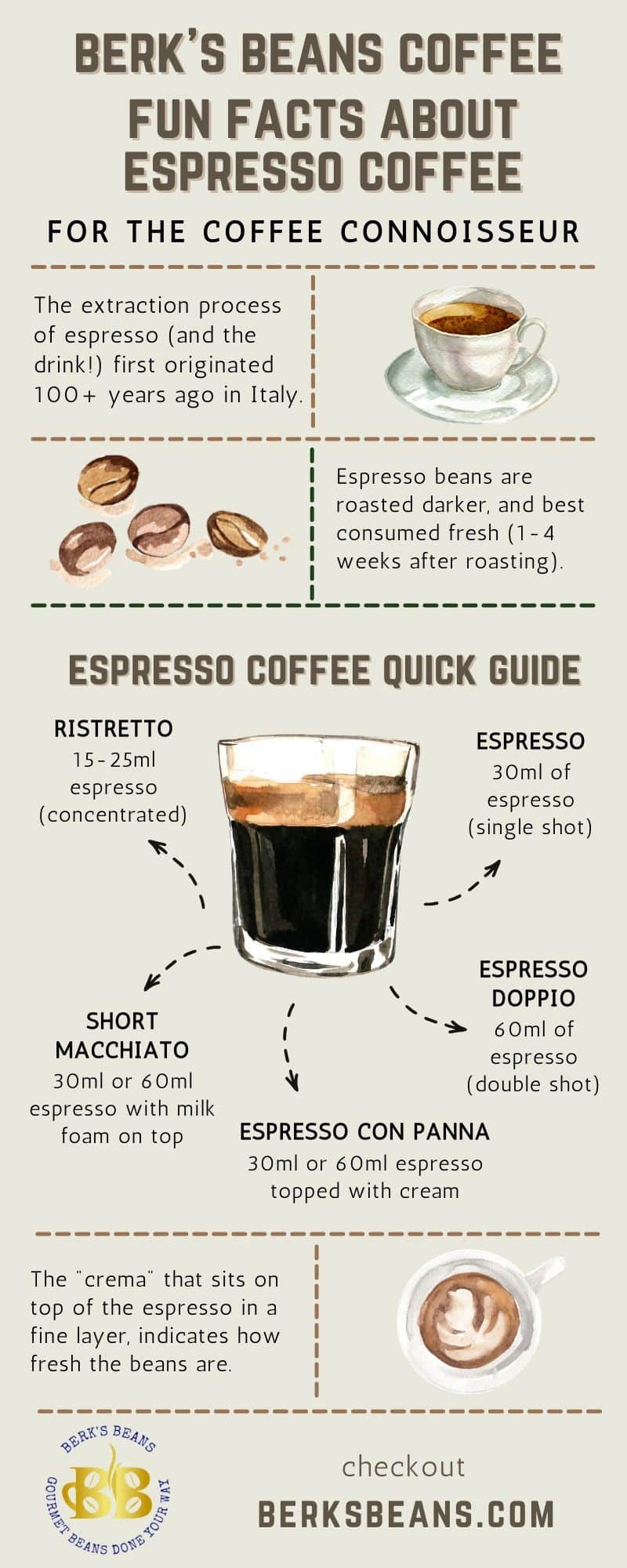
Espresso is one of the most fascinating and misunderstood preparations in the coffee world. It’s not a type of bean or a roast level — it’s a brewing method. And once you understand how it actually works, you’ll appreciate your shot a whole lot more. Here are 10 fun facts about espresso that every coffee lover should know.
1. Espresso Means “Pressed Out” in Italian
The word “espresso” comes from the Italian caffè espresso, which translates to “pressed-out coffee.” It refers to the method of forcing hot pressurized water through finely ground coffee — not to anything about speed, though espresso does brew fast (20–30 seconds).
2. Espresso Is Not a Type of Bean
There’s no such thing as an “espresso bean.” Any coffee bean can be used to make espresso. What makes espresso is the preparation method — pressurized hot water pushed through a fine grind at 9 bars of pressure. That said, many roasters (including us) offer blends specifically designed to shine as espresso, with flavor profiles that complement the method’s intensity.
3. A Shot of Espresso Has Less Caffeine Than a Cup of Drip Coffee
This surprises most people. A single shot of espresso (1 oz) contains about 63mg of caffeine. A standard 8-ounce cup of drip coffee contains 80–120mg. Espresso is more concentrated per ounce, but you drink far less of it. However, a double shot (doppio, 2 oz) brings you to about 126mg — in line with or exceeding drip.
4. The Crema Is a Sign of Freshness
That golden-brown foam on top of your espresso? It’s called crema, and it’s formed by CO2 gas emulsifying with espresso oils under pressure. Fresh coffee has more CO2 (released during roasting and trapped in the bean). Old coffee has less CO2 — which means less crema, and often a flat, lifeless shot. A thick, persistent crema is a reliable indicator of freshly roasted coffee.
5. Espresso Was Invented in Italy Around 1903
Luigi Bezzera is generally credited with inventing the first espresso machine in 1901, and Desiderio Pavoni commercialized it around 1903. The original motivation was practical — espresso machines were designed to make coffee faster in commercial settings, hence the “pressed-out” preparation.
6. The Perfect Espresso Takes 25–30 Seconds
Baristas and home espresso enthusiasts target a specific extraction window: a double shot should pull in 25–30 seconds from the moment you start the pump. Faster than 20 seconds = under-extracted (sour, weak). Slower than 35 seconds = over-extracted (bitter, harsh). Grind size is the primary way to control extraction time.
7. Light Roasts Work for Espresso — And They’re Growing in Popularity
Traditionally, espresso was made with dark roasts because they’re more forgiving and produce a consistent, bold flavor. But the specialty coffee movement has embraced light-roast espresso, which highlights fruity, floral, and complex origin characteristics. Light-roast espresso is trickier to dial in but incredibly rewarding when done right.
8. “Lungo,” “Ristretto,” and “Doppio” Are Official Variations
Espresso comes in several standardized variations: a ristretto (restricted shot) uses the same dose but only half the water — more intense and syrupy. A lungo (long shot) uses more water for a milder, larger extraction. A doppio is simply a double shot. Most espresso drinks at cafés are built on a doppio as the standard base.
9. Espresso Is the Base for Most Café Drinks
Lattes, cappuccinos, macchiatos, americanos, flat whites, cortados — the entire café menu is built on espresso. A latte is espresso + steamed milk with light foam. A cappuccino is espresso + equal parts steamed milk and foam. An americano is espresso + hot water, approximating the strength of drip coffee. Learning espresso unlocks the entire specialty coffee menu.
10. Freshly Roasted Beans Make a Dramatic Difference
Because espresso is so concentrated, the quality and freshness of your beans is magnified in every shot. Stale coffee produces flat, lifeless espresso with minimal crema. Fresh coffee — roasted within 1–2 weeks — produces espresso with bright crema, vibrant flavor, and complexity you can’t get from grocery store beans.
At Berk’s Beans Coffee, all our coffees are roasted to order and shipped within 72 hours. Whether you’re brewing espresso, pour over, or French press, you’ll taste the freshness in every cup. Shop our espresso-ready coffees and experience the difference fresh roasting makes.


