
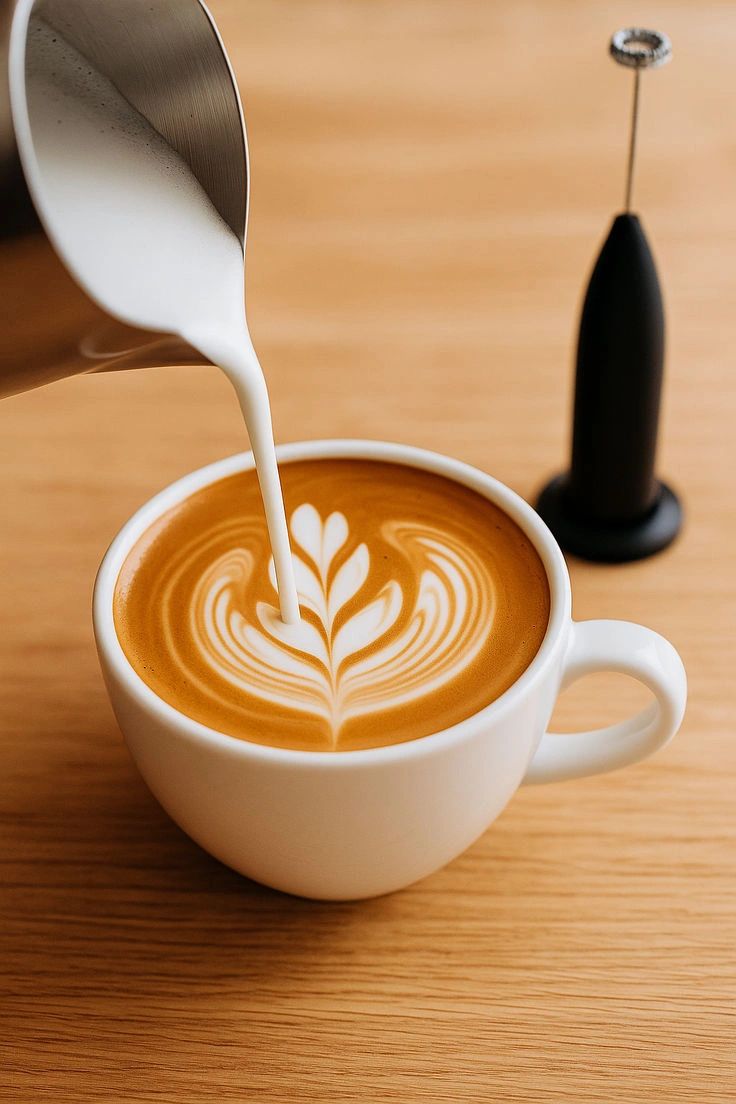
The best milk frother for cappuccino makes tight, dense microfoam, ideally heats the milk as it froths, cleans easily, and works with your milk of choice. Good foam isn’t just decoration — it’s what gives a cappuccino its smooth texture. Here’s how to choose and use one.
Why Foam Quality Matters
In a cappuccino, the foam affects mouthfeel and flavor, not just looks. A good frother produces microfoam — tiny, uniform bubbles that give milk a silky texture — rather than large airy bubbles that collapse. Dense microfoam sits neatly above the milk and espresso layers, holds its shape, and makes the whole drink better.
What to Look For
- Foam quality: tight, dense microfoam is the key differentiator.
- Capacity: small is fine for single cups; size up for families or multiple drinks.
- Heating: some frothers heat and froth at once; others need pre-warmed milk. Heating helps foam blend with espresso.
- Milk compatibility: if you use oat, almond, or soy, check it froths those well.
- Easy cleaning: milk residue ruins the next batch, so simple cleanup matters.
Types of Frother
| Type | How it works | Best for |
|---|---|---|
| Electric automatic | Heats and froths at the press of a button | Convenience and consistency |
| Handheld whisk | Battery-powered wand in a separate cup | Budget and portability |
| Manual pump/plunger | Agitate milk by hand | Simple, no power needed |
Each type trades off cost, effort, and foam quality. No frother at all? You can still get foam — see how to froth milk without a machine.
How to Froth for a Cappuccino
- Start with cold milk and warm it to about 140–150°F for the best texture.
- Leave space in the frother so the milk can expand as foam forms.
- Pour the frothed milk gently over espresso, holding back the foam, then spoon foam on top for the classic look.
- Clean the frother right after use so milk residue doesn’t affect the next batch.
Don’t Forget the Espresso
Great foam sits on top of great espresso — and that comes down to the beans. A fresh, medium-dark roast pulls the bold, sweet base a cappuccino needs. No espresso machine? You can still make a strong shot at home — see how to make espresso without a machine. Then start with fresh roasted-to-order beans from Concord, CA.
Frequently Asked Questions
What foam texture should a cappuccino have?
Thicker than a latte — dense enough to sit on top of the milk, with fine microfoam bubbles for a smooth feel.
Can I use non-dairy milk?
Yes — many frothers handle it, though results vary and it may not froth as thickly as whole dairy. Barista-style oat versions froth best.
Do I need a steam wand?
No. A steam wand is traditional, but a good dedicated frother makes excellent foam for home use.
What’s the right ratio?
A classic cappuccino is roughly one part espresso, one part steamed milk, and one part foam.
Whether you go automatic or handheld, focus on foam quality, milk compatibility, and easy cleaning — and you’re well on your way to café-style cappuccinos at home.