
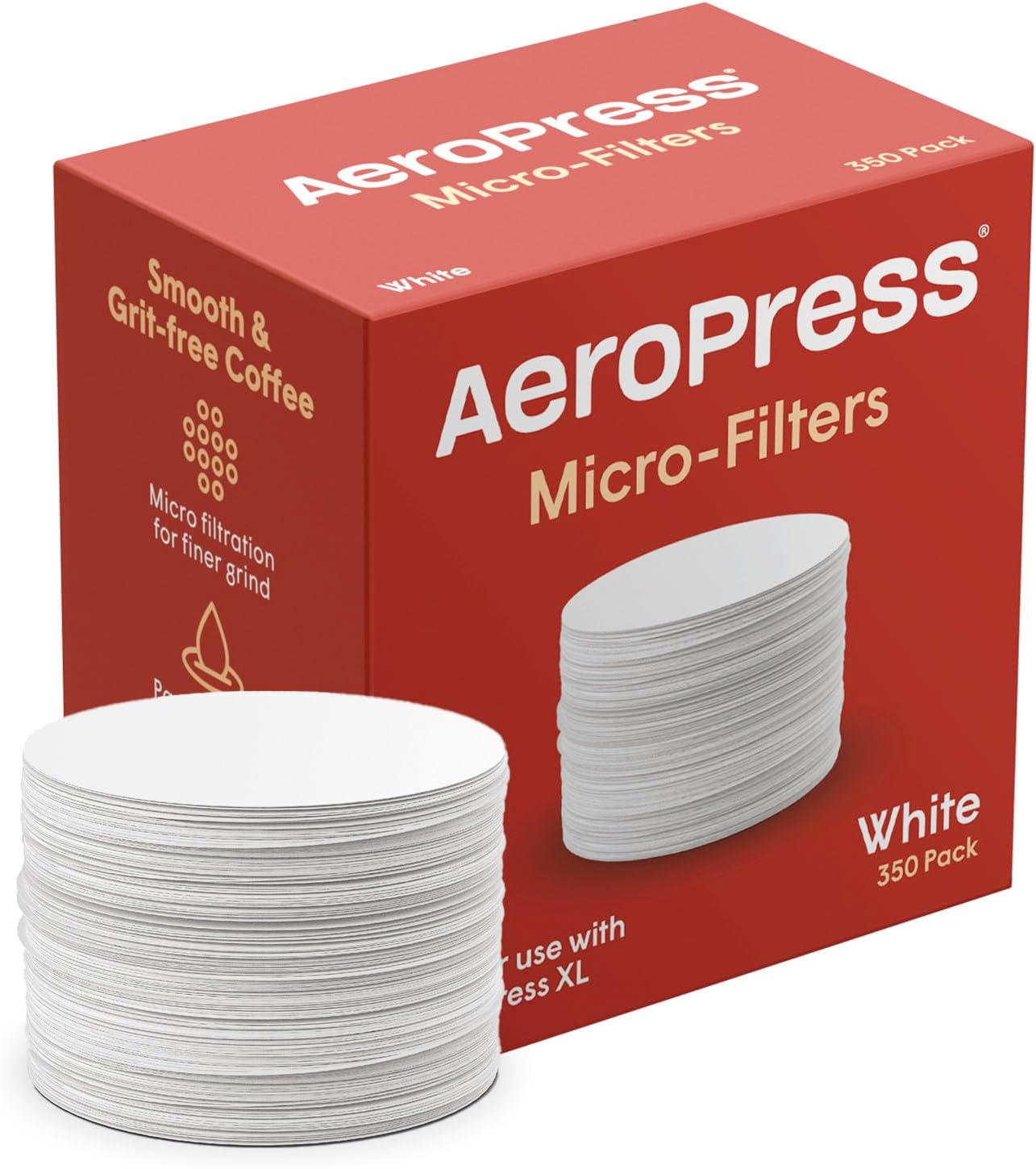
Description
AeroPress paper micro-filters are the cheapest part of the whole setup and the part that does the most to the cup. A ten dollar box of 350 is what separates a clean, grit free press cup from something closer to sludge, and most people never think about it until they run out on a Tuesday morning.

We keep a case of AeroPress paper micro-filters at the roastery because we brew test cups all day. Below is what we have learned about them, which is more than anyone expects to read about a disc of paper, but it turns out the filter is doing real work.
What AeroPress Paper Micro-Filters Do to Your Coffee
Two things. AeroPress paper micro-filters hold back the grounds, and they hold back a large fraction of the coffee oils and the very fine particles called fines. The first one is obvious. The second one is what actually changes how the coffee tastes.
Oils carry heavy, rounded mouthfeel. Fines keep extracting after you think brewing has stopped, and they contribute bitterness and a slightly gritty texture. A French press keeps both, which is why a press pot cup is thick and muddy in the last third. Paper takes both out, which is why the same coffee through the same water reads brighter, cleaner and more defined.
This is the whole reason we push people toward paper rather than a metal disc. Metal is reusable and it looks thrifty, but it passes fines and oils and you end up with a cup that tastes like a slightly better French press instead of what the press is actually capable of.
How to Use AeroPress Paper Micro-Filters Properly
There is real technique to AeroPress paper micro-filters, and skipping it costs you more flavor than most people would guess.
- Peel one filter off the stack. They stick together, so flex the stack slightly rather than digging with a fingernail.
- Seat it flat in the filter cap. Flat matters. A filter sitting on an angle leaves a channel at the edge.
- Rinse it with hot water before you screw the cap on. Ten seconds under the kettle is enough. This removes papery taste and preheats the cap.
- Screw the cap onto the chamber and brew as usual. For our house recipe, 17 grams of coffee at a fine drip grind, water at 200 to 205 degrees Fahrenheit, filled to 250 grams, one minute steep and a thirty second press.
- Press slowly and stop at the hiss. Pressing past it drags the most bitter fraction through the paper.
- Unscrew the cap over a bin and eject. The filter comes out stuck to a dry puck of grounds, and the whole thing goes in the compost.
Two adjustments worth knowing. Doubling up two AeroPress paper micro-filters slows the press and produces a slightly cleaner, lighter cup, which suits very light roasts. And if you are pressing a fine espresso style grind, a rinsed filter is not optional, because a dry filter with a fine bed is where most stuck plungers come from. Full method details live in our brew guide.
AeroPress Paper Micro-Filters Specs
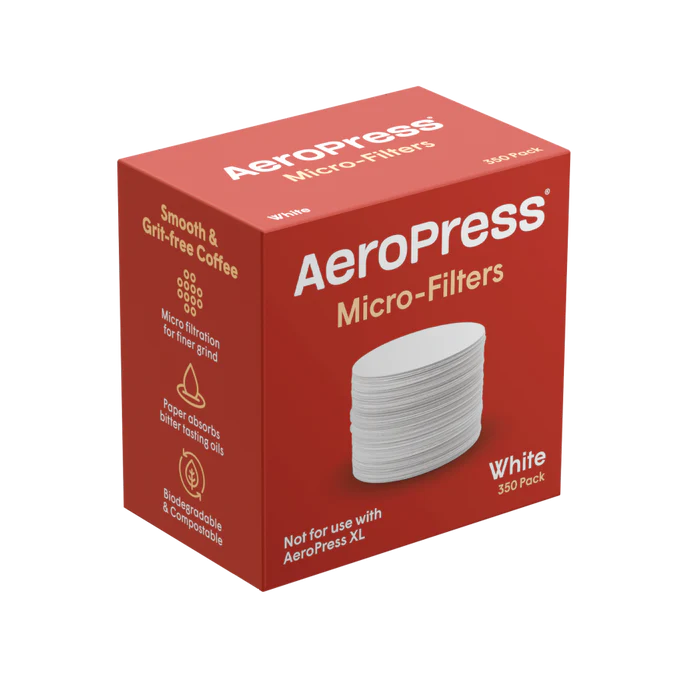
- 350 replacement filters per pack
- Removes grit, unlike other press type coffee makers
- Biodegradable
- Compostable
- Compatible with the AeroPress Original, AeroPress Go and AeroPress Clear
- Not compatible with the AeroPress XL coffee maker
- Price: 10.00
Check that XL line before you order AeroPress paper micro-filters. The XL takes a larger diameter filter and these will not seal in it. For the three standard presses, the AeroPress Original, the AeroPress Go Plus and the AeroPress Clear, this is the right pack.
Why a Roaster Cares About a Ten Dollar Box of Paper
We taste coffee for a living, and filtration is one of the few variables we hold constant so everything else can move. When we compare two lots off the roaster, both go through the same grind, the same water, the same ratio and the same paper. If the filter changed between cups, the comparison would be meaningless.
That consistency is the argument for buying AeroPress paper micro-filters in bulk rather than rationing them. People who reuse a filter to save three cents are introducing a variable into their morning for no reason. A used filter has partially clogged pores, so it flows slower and extracts longer, and the cup drifts bitter.
Paper also flatters the coffees we roast lightest. A washed Ethiopian or a Central American with real acidity needs the fines pulled out or the brightness turns into sourness with a rough edge. The filter is doing that work. The same box handles our darker roasts too, where it strips just enough oil to keep the finish clean rather than heavy.
The composting point is not a throwaway either. These are biodegradable and compostable, and since the spent puck ejects with the filter attached, the entire waste stream from a cup of coffee goes into one compost bin. No pod, no plastic, no liner.
Mistakes we see with these filters:
- Brewing on a dry filter, which adds a faint cardboard note and chills the cap
- Peeling off two by accident and wondering why the press feels stiff
- Storing the stack somewhere damp, which makes them stick into a solid block
- Reusing filters to economize on a product that costs under three cents a cup
- Ordering standard filters for an XL press, which do not fit
Frequently Asked Questions
How long does a pack of 350 AeroPress paper micro-filters last?
About a year at one cup per day. Two cups a day gets you roughly six months. For a small office brewing all morning, plan on a few packs a year.
Can I reuse a filter?
You physically can, once or twice, by rinsing it. We do not recommend it. Flow rate changes as the pores clog, so your press time and your extraction both shift, and the savings are pennies.
Are AeroPress paper micro-filters really compostable?
Yes, they are listed as biodegradable and compostable. The used filter comes out fused to the coffee puck, so the two go into a home compost bin together with nothing to separate.
Will they fit an AeroPress XL?
No. The XL uses a larger filter and these standard discs will not seal against its cap. These fit the Original, the Go and the Clear.
Do I need to rinse them every time?
We do, and it takes ten seconds. It removes any paper flavor and it warms the cap, which keeps your brew temperature from dropping at the start. With a fine grind it also helps the press run smoothly.
If you want the technical background on how filtration shapes a cup, the entry on the coffee filter covers the basics. Then add a pack to your order with the rest of your coffee gear so you are not caught short.


